
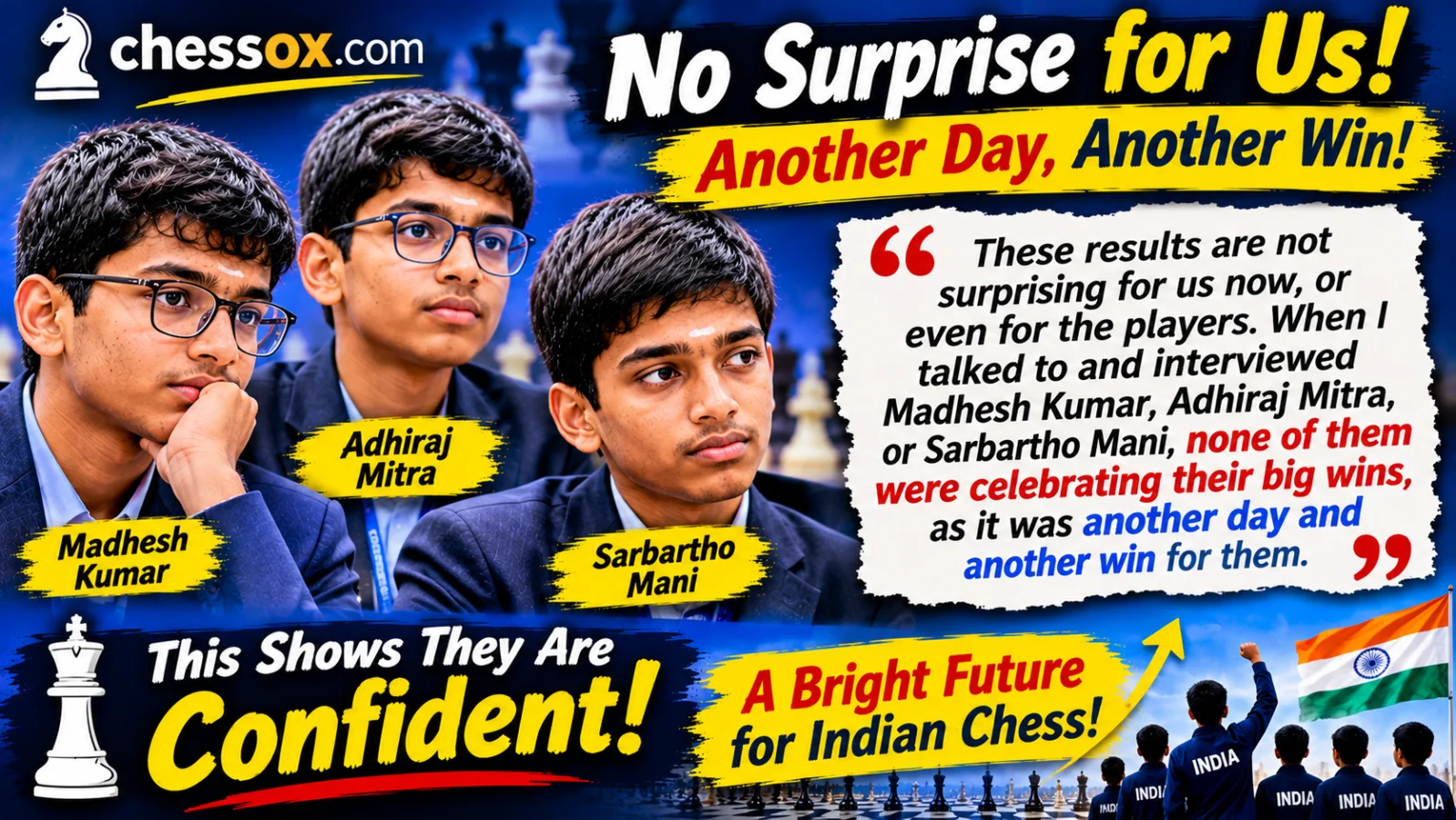
Madhesh Kumar, Adhiraj Mitra and Sarbartho Mani: Young Indian Chess Talents Making Winning a Habit
India's young chess talents are displaying exceptional confidence and consistency. Madhesh Kumar, Adhiraj Mitra and Sarbartho Mani are treating even their biggest victories as another normal day at the chessboard, reflecting the growing strength of the next generation of Indian chess.
Indian chess is witnessing the emergence of a highly talented generation of young players who are gradually making their presence felt through impressive performances and consistent victories. What makes their achievements even more interesting is not just their ability to win games, but also the confidence and maturity they display after winning.
A recent observation about young Indian chess players highlights how much the mindset of the next generation is changing. Victories that might once have been considered major achievements are now becoming increasingly familiar for these youngsters.
Madhesh Kumar, Adhiraj Mitra and Sarbartho Mani are among the young talents attracting attention with their performances. Their results have reached a stage where impressive victories are no longer a surprise for those following their progress. Interestingly, even the players themselves appear to have become accustomed to winning.
During conversations and interviews with these three young chess players, one particular aspect stood out. Despite achieving significant victories, none of them seemed particularly interested in celebrating their big wins. There were no exaggerated celebrations or reactions suggesting that they had accomplished something extraordinary.
Instead, their attitude was remarkably calm. For them, winning a big game appeared to be just another day at the chessboard and another victory in their continuing chess journey.
This simple but interesting observation says a lot about the confidence these youngsters are developing. They are becoming comfortable with competitive situations and are learning to handle victories as part of their regular progress.
In chess, every tournament brings new challenges. Players have to deal with strong opponents, complicated positions, time pressure and critical decisions. Winning one important game is an achievement, but maintaining consistency across multiple rounds requires discipline, preparation and concentration.
The ability to move forward without getting carried away by a victory is also an important part of a competitive player's journey. These youngsters appear focused on the bigger picture rather than allowing individual results to define their progress.
India has already established itself as one of the strongest countries in international chess, producing world-class players who have inspired millions of young enthusiasts. The success of established Indian Grandmasters has encouraged more children to take up the game seriously and pursue competitive chess.
Now, a new generation of youngsters is continuing that momentum.
Players like Madhesh Kumar, Adhiraj Mitra and Sarbartho Mani represent the growing depth of Indian chess talent. Their performances and confident approach provide another reason for chess followers to remain excited about the future.
What is particularly encouraging is that these youngsters are not treating victories as the final destination. Instead, winning appears to be becoming a natural part of their competitive journey. This mindset can help them approach future tournaments with greater confidence and focus.
One of the most interesting aspects of the observation is the way these young players reacted to their achievements.
For many developing players, a major victory can be an emotional moment. It can bring excitement, celebrations and a sense of accomplishment. However, when a player starts winning regularly, the challenge gradually changes. The focus shifts from celebrating individual victories to maintaining performance and preparing for the next opponent.
That is the kind of attitude highlighted in the conversations with Madhesh Kumar, Adhiraj Mitra and Sarbartho Mani.
Their calm reactions suggest that they are becoming increasingly comfortable with success. Rather than being overwhelmed by their achievements, they seem ready to continue working and competing.
Of course, every young chess player's journey involves challenges, difficult losses and opportunities to learn. Maintaining this confidence while continuing to improve will be important as they face stronger opponents and bigger tournaments.
A Bright Future for Indian Chess
The development of young talent is essential for the long-term growth of any sporting discipline. In chess, consistent opportunities to compete, gain experience and face challenging opponents can play an important role in shaping future champions.
The confidence displayed by these young Indian players is an encouraging sign. Their performances show the enthusiasm and competitive spirit emerging among India's younger chess generation.
For Indian chess fans, there is plenty to look forward to. Madhesh Kumar, Adhiraj Mitra and Sarbartho Mani are names worth following as they continue their chess journeys.
Their achievements are not just about individual victories. They also represent the growing confidence of young Indian chess players who are beginning to believe that competing and winning at a high level can become a normal part of their lives.
Big victories, calm reactions and growing confidence — India's next generation of chess players is giving fans plenty of reasons to dream about the future.
ChessOx Editorial
This article was compiled and fact-checked by the ChessOx Editorial Desk in accordance with our Editorial Standards. ChessOx provides educational chess theory, engine-verified master game analysis, and tournament reporting for players worldwide.
Share this masterclass analysis with fellow chess players.