
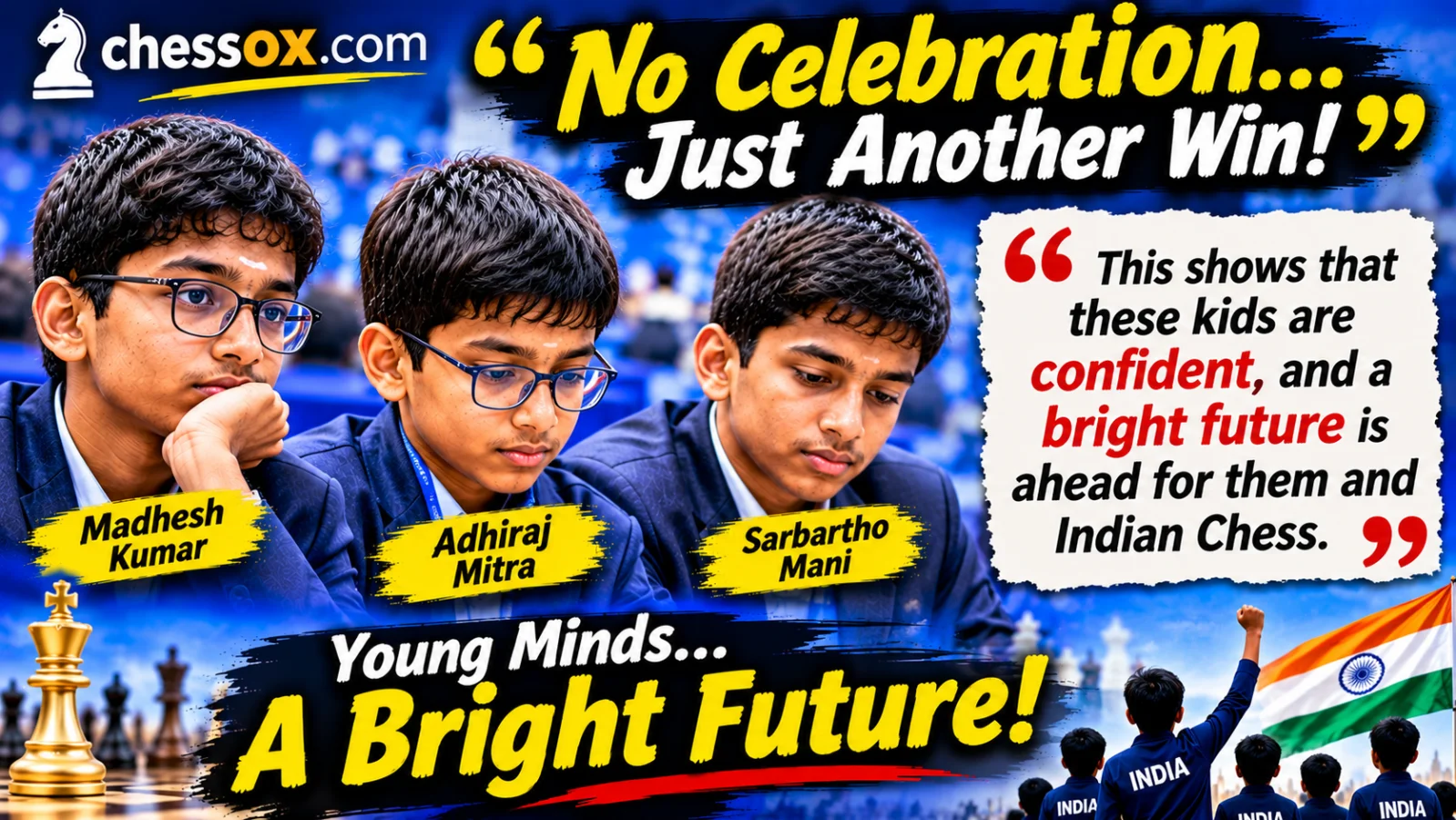
Young Indian Chess Stars Making Winning a Habit: Madhesh Kumar, Adhiraj Mitra and Sarbartho Mani Impress
India's young chess talents are displaying remarkable confidence and consistency, with victories becoming a regular part of their competitive journey. Madhesh Kumar, Adhiraj Mitra and Sarbartho Mani are among the youngsters reflecting the growing strength and promising future of Indian chess.
Indian chess is witnessing an exciting phase, with a new generation of young talents making their presence felt through impressive performances and consistent victories. What makes these youngsters particularly interesting is not just their ability to win important games, but also the confidence and calmness they demonstrate after achieving success.
An interesting observation about these young players highlights how winning is gradually becoming a normal part of their chess journey. Results that might once have created huge excitement are now being treated as another achievement in their regular competitive schedule.
Madhesh Kumar, Adhiraj Mitra and Sarbartho Mani are among the young Indian chess players attracting attention through their performances. Their achievements demonstrate the growing depth of talent emerging from India's chess ecosystem.Big Victories, But No Big Celebrations!
One particularly interesting aspect was noticed during conversations and interviews with Madhesh Kumar, Adhiraj Mitra and Sarbartho Mani.
Despite achieving important victories, none of these youngsters appeared particularly excited or celebrated their big wins. There were no extraordinary reactions or lengthy celebrations. Instead, they appeared to take their victories in a very normal way.
For these young players, winning an important chess game seemed like just another day at work. They secured their victories, accepted the results and continued with their chess journey.
This attitude offers an interesting glimpse into their mindset. When players become accustomed to winning, individual victories may no longer feel like extraordinary moments. Their attention gradually shifts towards the next opponent, the next round and the next challenge.Rather than getting carried away by one successful result, these youngsters appear comfortable with the expectations that come with competitive chess.
Confidence Is Becoming Their Biggest Strength
Confidence plays an important role in chess, especially when young players compete against experienced opponents.
Every game demands concentration, patience, calculation and the ability to make difficult decisions under pressure. A single mistake can change the entire direction of a game.
For young players, handling these situations consistently is an important part of their development.
The calm reactions of Madhesh Kumar, Adhiraj Mitra and Sarbartho Mani after their victories reflect the confidence they are developing through competitive experience.Their approach also highlights an important quality of successful players: the ability to treat victories as motivation to continue improving rather than as a reason to become satisfied.
India's Young Chess Generation Continues to Grow
Over the past few years, Indian chess has attracted increasing attention because of the performances of its players at international competitions.
The achievements of established Indian Grandmasters have inspired thousands of youngsters to take up chess seriously. More children are participating in tournaments, attending chess academies and developing their skills through regular competitive practice.
This growing interest is creating opportunities for emerging talents to showcase their abilities.
Young players such as Madhesh Kumar, Adhiraj Mitra and Sarbartho Mani represent this exciting generation. Their performances are another reminder that Indian chess has talent emerging across different age groups.The journey from junior tournaments to higher-level competitions requires years of preparation, experience and dedication. Every tournament provides an opportunity to learn, while every victory adds another valuable experience.
Winning Is Not the Final Destination
In chess, maintaining consistency is often more challenging than winning a single tournament or an individual game.
Young players must learn how to handle both victories and defeats. They need to analyse their mistakes, improve their opening preparation, strengthen their tactical understanding and develop the patience required for longer games.
The ability to remain calm after a major victory can also help players maintain their focus.
For these youngsters, the most important challenge will be to continue developing their skills while facing stronger competition in the future.
Their current confidence and performances provide an encouraging starting point for that journey.
A Bright Future Ahead for Indian Chess
The most encouraging part of this observation is that these children are beginning to see big victories as part of their everyday competitive journey.When a major win becomes another normal day for a young chess player, it reflects how comfortable that player is becoming with competitive success.
Madhesh Kumar, Adhiraj Mitra and Sarbartho Mani are names worth following as they continue their development. Their performances, confidence and attitude offer plenty of encouragement to Indian chess followers.
India's chess journey is no longer limited to a handful of established stars. A growing group of young players is emerging, bringing fresh energy, ambition and competitive spirit to the game.
There will undoubtedly be difficult games, unexpected defeats and new challenges ahead. But the experience these youngsters gain today will be valuable as they progress towards bigger competitions.
Big victories without big celebrations, confidence without unnecessary excitement and a strong desire to keep moving forward — these are encouraging signs from India's next generation of chess talents.
ChessOx Editorial
This article was compiled and fact-checked by the ChessOx Editorial Desk in accordance with our Editorial Standards. ChessOx provides educational chess theory, engine-verified master game analysis, and tournament reporting for players worldwide.
Share this masterclass analysis with fellow chess players.